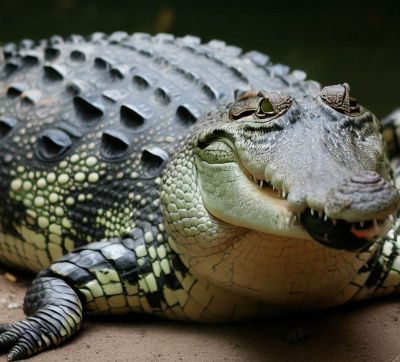
Scientists have officially confirmed a groundbreaking occurrence: the first recorded case of a crocodile achieving pregnancy without any male involvement. This remarkable event took place in Costa Rica, where a female American crocodile had been held in captivity. Throughout her entire life, she had no contact whatsoever with male crocodiles. Nevertheless, in 2018, she laid a clutch of eggs, one of which contained a fully formed fetus. Astonishingly, genetic analysis revealed that the fetus shared an astonishing 99.9% genetic similarity with its mother, leaving no doubt that it was conceived without a father.
While this virgin birth phenomenon is indeed a first for crocodiles, it is not entirely unprecedented. Parthenogenesis, the process of reproducing without fertilization from a male, has been observed in other reptiles like lizards and snakes, as well as in certain species of birds and fish.
The mechanism behind parthenogenesis is not yet fully comprehended, but scientists believe it involves a process called automixis. In automixis, two copies of the female’s DNA merge, generating a new cell that can develop into a fetus.
The confirmation of virgin birth in crocodiles carries significant implications, suggesting that this reproductive strategy might be more prevalent than previously assumed. Moreover, it raises intriguing speculation regarding the potential occurrence of virgin birth among dinosaurs.
Given the close evolutionary relationship between dinosaurs and crocodiles, it is plausible that dinosaurs also possessed the ability to reproduce without a male partner. This adaptation would have proven advantageous, enabling dinosaurs to survive during periods when few males were available.
The discovery of virgin birth in crocodiles serves as a powerful reminder of the extraordinary diversity of life on our planet. It underscores the fact that there is still much we have yet to uncover about the wonders of the natural world.