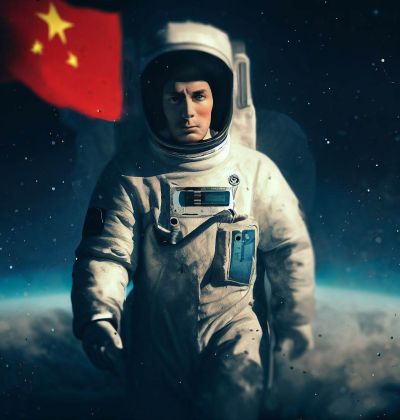
On May 29, 2023, China made a significant achievement in its space program with the launch of the Long March 2F rocket from the Jiuquan Satellite Launch Center. The rocket carried the Shenzhou-16 spacecraft, which had a crew of three astronauts, including the first Chinese civilian to venture into space, Gui Haichao, who served as a payload expert. The primary objective of the mission was to conduct scientific experiments and perform maintenance tasks on the Tiangong space station.
After a successful launch, the Shenzhou-16 spacecraft docked with the Tiangong space station on May 30, 2023. Over the course of the following five months, the crew engaged in a variety of scientific experiments encompassing plant growth, materials science, and human health. These experiments aimed to contribute to our understanding of various aspects of space exploration and improve our capabilities for future missions.
On October 28, 2023, the Shenzhou-16 spacecraft undocked from the Tiangong space station and safely returned to Earth. The mission accomplished its goals, marking a significant milestone for China’s space program and its increasing ambitions in space exploration.
China has emerged as one of the prominent players in the field of space exploration, and its achievements in recent years demonstrate its commitment to advancing its space capabilities. With ongoing missions and plans for future endeavours, China is likely to continue making significant contributions to the exploration and study of space in the years to come.