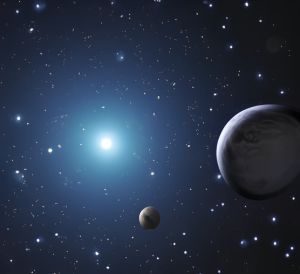
Recent studies have suggested that small stars, which are the most common type of star in the universe, may be able to host larger planets than previously thought. This is significant because it expands the number of stars that could potentially harbour habitable planets and increases the chances of finding life beyond our solar system.
The previous assumption was that small stars, also known as red dwarfs, were only capable of hosting planets that were roughly the size of Earth or smaller. This was based on the fact that red dwarfs are much cooler and dimmer than other types of stars, which would limit the ability of planets in their habitable zones to maintain liquid water.
However, recent studies have shown that the habitable zone around red dwarfs is much closer to the star than previously thought. This means that planets orbiting in this zone can receive enough warmth to maintain liquid water, despite the star’s cooler temperature.
In addition, recent observations have detected larger planets orbiting around red dwarfs. For example, a planet called GJ 3470 b was discovered in 2017 and is roughly twice the size of Earth. This suggests that red dwarfs are capable of hosting planets that are larger than previously thought.
While these findings are exciting, there are still many unknowns when it comes to the habitability of planets around red dwarfs. For example, red dwarfs are known for their high levels of stellar activity, which could make it difficult for life to survive on nearby planets. However, ongoing research will continue to shed light on these questions and further our understanding of the potential for life beyond our solar system.