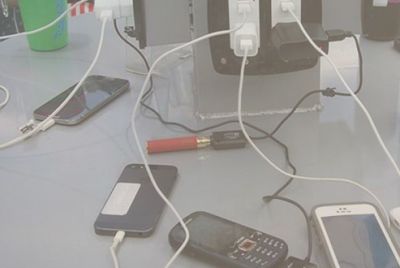
Juice jacking is a relatively new security risk that has emerged in recent years with the increasing use of public USB charging stations in places like airports, coffee shops, and other public spaces. The risk arises because public charging stations are often not secure, and a malicious criminals could have tampered with the station to install malware or steal your data.
One way to avoid juice jacking is to avoid using public USB charging stations whenever possible. Instead, you can carry your own portable charger or charge your device using a wall outlet. However, if you must use a public charging station, you should take precautions to protect your device.
One option is to use a USB data blocker, which is a small device that sits between your device and the charging cable. The USB data blocker prevents any data from being transferred between your device and the charging station, so even if the station has been tampered with, your data will be safe.
Another option is to use a charging cable that has a built-in security chip. These cables are designed to protect your device from malware and data theft by preventing any unauthorized data transfer.
In addition to using these tools, it’s also important to keep your device’s operating system and security software up to date. Updates often include security patches that can help protect your device from the latest threats, including those related to juice jacking.
If you are concerned about juice jacking, it’s also important to be wary of any public charging stations that look suspicious or are in an isolated location. For example, charging stations that are hidden behind a desk or in a corner may be more likely to have been tampered with.