Skip to content
Amigura Technology Solutions

Website design, php, mysql, css, html, logo – Amigura.co.uk

  • Home
  • Blog
    • Security
    • Software Alerts
    • Technology
    • Science
    • Webmaster Tools
  • Contact
    • Privacy Policy
Amigura Technology Solutions

Website design, php, mysql, css, html, logo – Amigura.co.uk

June 27, 2023June 26, 2023

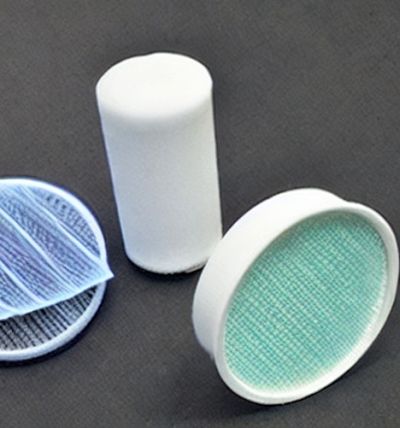
Carbon dioxide filters printed with 3D printer

While 3D printing carbon dioxide filters is a promising development, it is important to note that the specific method described involving hydrogels and carbonic anhydrase is based on the research conducted by the team at North Carolina State University. The steps and materials may vary depending on the specific application and desired performance of the filter. Therefore, it is advisable to consult the latest research, guidelines, or expert advice for the most up-to-date and accurate information on 3D printing carbon dioxide filters.

Here are some general steps you could follow to create a carbon dioxide filter using a 3D printer:

  1. Design the filter: Use 3D modeling software to design the filter’s structure, considering factors like surface area, porosity, and compatibility with the desired material.
  2. Choose a suitable 3D printing material: Select a material that is capable of capturing carbon dioxide effectively. Hydrogels, as mentioned earlier, are one type of material that can be used due to their water-absorbing properties. However, other materials may also be suitable depending on the specific requirements and constraints of the application.
  3. Prepare the 3D printer: Set up the 3D printer according to the manufacturer’s instructions. Ensure that the printer is calibrated correctly and that the printing material is loaded properly.
  4. Print the filter: Use the 3D printer to print the filter based on the designed model. This process involves the layer-by-layer deposition of the chosen material to create the desired structure.
  5. Post-processing, coating, and testing: Once the filter is printed, it may require post-processing steps such as cleaning, drying, and possibly coating it with specific substances to enhance its carbon dioxide capture capabilities. Afterward, the filter should be thoroughly tested to assess its efficiency and performance.

It is worth mentioning that the development of efficient and reliable carbon dioxide filters is an active area of research, and the field continues to evolve. Consulting scientific publications, academic institutions, or experts in the field will provide the most accurate and up-to-date information regarding specific methods and materials suitable for 3D printing carbon dioxide filters.

Technology 3d printerpollution

Post navigation

Previous post
Next post

Recent Posts

  • Big freeze drove humans out of Europe
  • Fifth force of nature
  • Russia launches space mission to Moon
  • Mum, daughter and Brit, 80, space flight
  • Fight for money over sewage leaks

Jamaican Rum Cakes With A Twist

We have taken our delicious “fruitless” recipe to the next level by creating Jasmine’s Jamaican Rum Cake, a high-end product that tastes just as good as it looks, presented in a uniquely packaged luxury feel box that keeps the cake fresh.

>> Olga & Asquith Products Ltd <<

Categories

  • Science
  • Security
  • Software Alerts
  • Technology
  • Webmaster Tools
  • September 2023
  • August 2023
  • July 2023
  • June 2023
  • May 2023
  • April 2023
  • March 2023
  • May 2020
  • July 2017
  • June 2017
  • May 2017
  • April 2017
  • March 2017
  • February 2017
  • January 2017
  • December 2016
  • November 2016
  • October 2016
  • September 2016
  • August 2016
  • July 2016
  • June 2016
  • May 2016
  • April 2016
  • March 2016
  • February 2016
  • January 2016
  • December 2015
  • November 2015
  • October 2015
  • September 2015
  • August 2015
  • July 2015
  • June 2015
  • May 2015
  • April 2015
  • March 2015
  • February 2015
  • January 2015
  • December 2014
  • November 2014
  • October 2014
  • September 2014
  • August 2014
  • July 2014
  • June 2014
  • May 2014
  • April 2014
  • March 2014
  • February 2014
  • January 2014
  • December 2013
  • November 2013
  • October 2013
  • September 2013
  • August 2013
  • July 2013
  • June 2013
  • May 2013
  • April 2013
  • March 2013
  • February 2013
  • January 2013
  • December 2012
  • November 2012
  • October 2012
  • September 2012
  • August 2012
  • July 2012
  • June 2012
  • May 2012
  • April 2012
  • March 2012
  • February 2012
  • January 2012
  • December 2011
  • November 2011
  • October 2011
  • September 2011
  • August 2011
  • July 2011
  • June 2011
  • May 2011
  • April 2011
  • March 2011
  • February 2011
  • January 2011
  • December 2010
  • November 2010
  • October 2010
  • September 2010
  • August 2010
  • July 2010
  • June 2010
  • May 2010
  • April 2010
  • March 2010
  • February 2010
  • January 2010
  • December 2009
  • November 2009
  • October 2009
  • September 2009
  • August 2009
  • July 2009
  • June 2009
  • May 2009
  • April 2009
  • March 2009
  • February 2009
  • January 2009
  • December 2008
  • November 2008
  • October 2008
  • September 2008
  • August 2008
  • July 2008
  • June 2008
  • May 2008
  • April 2008
  • March 2008
  • February 2008
  • January 2008
  • December 2007
  • November 2007
  • October 2007
  • September 2007
  • August 2007
  • July 2007
  • June 2007
  • May 2007
  • April 2007
  • March 2007
  • February 2007
  • November 2006
  • October 2006
  • September 2006
  • August 2006
  • July 2006
  • June 2006
  • November 2000
©2026 Amigura Technology Solutions | WordPress Theme by SuperbThemes
This website uses cookies to improve your experience. We'll assume you're ok with this, but you can opt-out if you wish. Cookie settingsACCEPT
Privacy & Cookies Policy

Privacy Overview

This website uses cookies to improve your experience while you navigate through the website. Out of these cookies, the cookies that are categorized as necessary are stored on your browser as they are essential for the working of basic functionalities of the website. We also use third-party cookies that help us analyze and understand how you use this website. These cookies will be stored in your browser only with your consent. You also have the option to opt-out of these cookies. But opting out of some of these cookies may have an effect on your browsing experience.

Read More

Necessary
Always Enabled
Necessary cookies are absolutely essential for the website to function properly. This category only includes cookies that ensures basic functionalities and security features of the website. These cookies do not store any personal information.
Non-necessary
Any cookies that may not be particularly necessary for the website to function and is used specifically to collect user personal data via analytics, ads, other embedded contents are termed as non-necessary cookies. It is mandatory to procure user consent prior to running these cookies on your website.
SAVE & ACCEPT