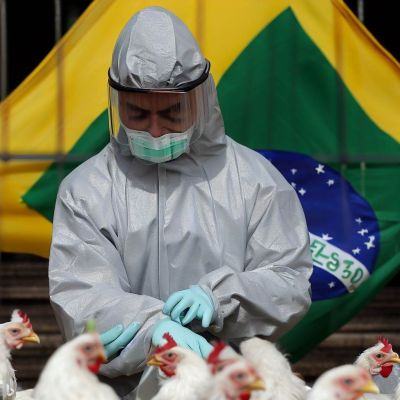
On May 22, 2023, Brazil announced a state of animal health emergency due to the detection of eight cases of avian flu in wild birds. These cases were identified in the states of Espirito Santo and Rio de Janeiro.
The avian flu outbreak is caused by the highly contagious H5N1 virus, which poses a significant threat to both poultry and potential transmission to humans, although human cases are infrequent.
To control the outbreak, the Brazilian government has implemented several measures, including:
- Officially declaring an animal health emergency, granting the government authority to implement extraordinary measures to combat the outbreak.
- Temporarily suspending the movement of poultry and poultry products from the affected areas to prevent the spread of the virus to other regions.
- Administering vaccinations against the H5N1 virus to safeguard poultry populations.
- Conducting thorough monitoring of wild birds to promptly identify any signs of the virus and prevent further outbreaks.
Collaboration with the World Organization for Animal Health (OIE) is a vital aspect of Brazil’s containment efforts. The OIE has declared a state of emergency in Brazil and is providing technical support to the Brazilian government.
Given that the poultry industry in Brazil holds substantial economic value, employing millions of individuals and contributing billions of dollars, the bird flu outbreak poses a severe threat. Its impact on the economy and food security of the nation could be significant.
Nonetheless, the Brazilian government is taking this outbreak seriously, devoting considerable efforts to containment. With confidence, the government anticipates successful containment measures that will safeguard the poultry industry.