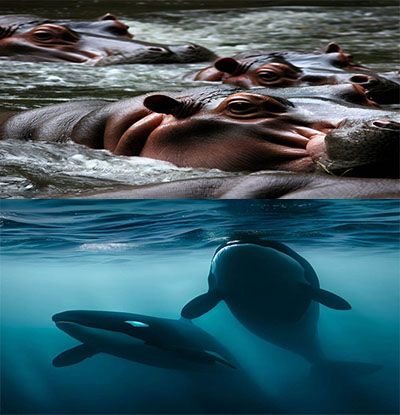
The UK government has unveiled plans to expand its existing ivory ban to encompass hippos, killer whales, narwhals, walruses, and sperm whales. This proposed ban, currently in its final stages of consultation, aims to criminalize the sale, purchase, and possession of any ivory products derived from these animals.
The decision to include these species in the ban arises from concerns regarding the detrimental impact of the global ivory trade on their populations. For instance, hippos face significant threats as their teeth are sought after for crafting jewelry and other ornamental items. Killer whales and sperm whales, on the other hand, are targeted for their oil, which is used in traditional medicinal practices.
By extending the ban, the UK government hopes to bolster conservation efforts and safeguard these species from the brink of extinction. Current estimates indicate that only around 100,000 hippos remain in the wild, while the population of killer whales experiences a worrisome decline of approximately 5% per year.
Conservationists are expected to welcome this move, recognizing its significance in combatting poaching and curbing the illegal wildlife trade. However, it is anticipated that opposition may arise from sectors involved in the ivory trade industry, as well as from certain traditional communities that utilize ivory for cultural purposes.
A final decision on the ban is anticipated from the UK government in the following months. In the meantime, here are some additional key details regarding the proposed ban:
- The ban would encompass all ivory products, including jewelry, carvings, and musical instruments.
- Selling, purchasing, or possessing ivory products originating from the five aforementioned animal species would become illegal.
- The ban would include specific exemptions, such as items exceeding 100 years of age, those utilized for religious or cultural reasons, and those employed in scientific research.
- The UK government’s Environment Agency would oversee the enforcement of the ban.
Overall, this ban signifies a significant stride in combatting poaching and the illegal wildlife trade, demonstrating the UK government’s commitment to the protection of endangered species.