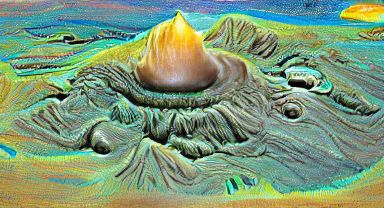
Venus is a planet in our solar system that is known for its extreme environment, with temperatures hot enough to melt lead and a thick, toxic atmosphere composed mainly of carbon dioxide. Although Venus is often referred to as Earth’s “sister planet” due to its similar size and composition, it is very different in many other ways.
One of the most interesting features of Venus is its active volcanoes. Despite being a rocky, terrestrial planet like Earth, Venus has more than 1,600 major volcanoes, many of which are still active. In fact, Venus is believed to have the most volcanic activity of any planet in our solar system.
The Venusian volcanoes are primarily shield volcanoes, which are broad, gently sloping mountains formed by low-viscosity lava flows. Unlike the explosive, ash-producing eruptions seen on Earth, the volcanic activity on Venus is characterized by slow-moving lava flows that can cover vast areas of the planet’s surface.
The presence of active volcanoes on Venus suggests that the planet’s interior is still geologically active, and may provide insights into the formation and evolution of terrestrial planets in general. However, studying Venus remains a challenge due to its harsh environment, and much about the planet’s volcanoes and geology remains to be explored and understood.