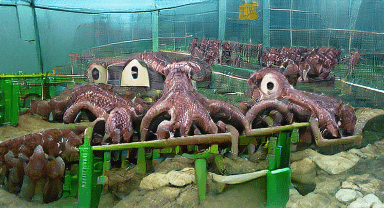
Octopuses are one of the most intelligent and fascinating creatures in the world. With their unique appearance and ability to change colour and shape, they have captured the imagination of people for centuries. But a recent proposal to build the world’s first octopus farm has alarmed scientists and animal rights activists.
The proposal, put forward by a company called Poseidon Ocean Farms, is to farm octopuses in tanks for consumption. The company claims that this would provide a sustainable source of protein that is in high demand, and would also reduce the pressure on wild octopus populations. But critics argue that there are serious ethical and ecological concerns with this proposal.
Octopuses are highly intelligent and complex animals, with advanced cognitive abilities and complex social behaviours. They are also known to experience pain and suffering. In the wild, octopuses are solitary creatures that roam the ocean floor in search of food and mates. In captivity, they would be confined to small tanks, unable to engage in their natural behaviours or interact with other octopuses.
Another concern is the impact that octopus farming could have on the environment. Octopuses are predators that play an important role in marine ecosystems, regulating populations of other marine animals. Farming them on a large scale could disrupt these ecosystems and lead to unintended consequences.
Scientists and animal rights activists have called for a moratorium on octopus farming until more is known about the impact it could have on the animals and the environment. They argue that more research is needed to fully understand the biology and behaviour of octopuses, and to develop more humane and sustainable methods of producing protein.
In response to these concerns, Poseidon Ocean Farms has pledged to work with scientists and animal welfare organizations to ensure that their farming methods are ethical and sustainable. The company claims that they will use advanced technology to create a stress-free environment for the octopuses, and that they will carefully monitor the impact of their operations on the environment.
The debate over octopus farming raises important questions about our relationship with animals and the environment. As we continue to search for sustainable sources of protein, we must also consider the ethical and ecological implications of our actions. By working together to find solutions that respect the welfare of animals and the health of our planet, we can create a more sustainable and compassionate world for all.